
The “No Plan”-demic
Trump’s unpredictable tariff announcements have triggered a supply shock wave heading straight toward us.

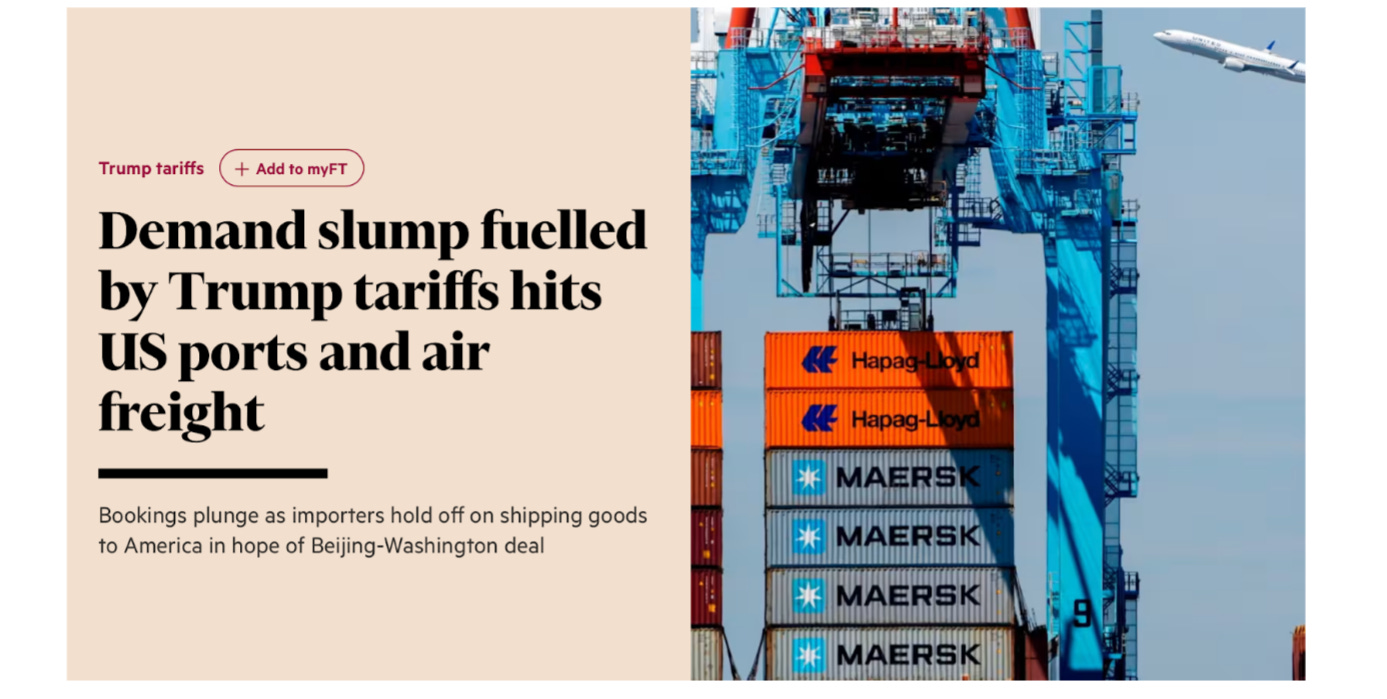
In the coming weeks, we will be facing a supply chain crisis from Donald Trump’s chaotic tariff and global trade pronouncements. Economists, shipping experts and retailer CEOs are all sounding the same alarm, but the White House either isn’t listening or doesn’t care.
When Trump announced his “Liberation Day” tariffs in early April, the markets tanked. Tariffs are bad for business, and Trump’s tariffs were beyond even the worst case scenarios envisioned by the business community. It was only when the bond market itself began to teeter that Trump’s panicked advisors got him to hit pause on most of the tariffs for 90 days.
But to prove he was “tough” on trade, Trump still hiked tariffs on China to triple digits. China then retaliated with its own high tariffs, officially launching a new trade war between the two economic superpowers.
Retailers, importers and every worker in the supply chain are now at great risk and will be the first to feel the effects of the highest tariffs since Smoot-Hawley. Think of the tariff shock as an earthquake across the Pacific—one sending a tsunami to our shores. It takes time to travel here. So just how bad are things looking?
Let’s review some startling numbers showing a collapse in shipping. Then let’s check in on a “ground zero” point, the gigantic port of Los Angeles, where large shipments from Asia normally arrive. Then as a measure of practical effects, let’s examine how import tariffs are already starting to show up on customer receipts from popular discount retailers such as Temu and Shein.
Off a cliff
According to the Financial Times, almost 400,000 fewer containers than originally planned are booked on Asia to North America routes. That’s a 25 percent drop from pre-tariff numbers. You can see this most sharply in bookings for 20-foot shipping containers out of China to the U.S. The mid-April figures on these containers are already 45 percent lower than a year earlier.
Overall shipping numbers would be even lower by now but for one thing: Big companies have been preparing for the tariffs to hit. Specifically, they have been building up inventory in anticipation that there will be sharply lower bookings come May.
The Wall Street Journal reported on the stocking up in late March:
Retailers selling merchandise from kitchenware to sneakers are stockpiling goods in an attempt to blunt the impact of the Trump administration’s new tariffs on their bottom lines.
Companies from large retailers such as warehouse chain Costco Wholesale to specialty merchants such as home-goods retailer Williams Sonoma and apparel seller Zumiez say they are holding more inventory after placing unusually big orders to beat Trump’s new tariffs.
Indeed, recent arrivals of shipping containers from Asia are actually up sharply as importers front load deliveries. That can create a mirage that everything is fine, like good weather before a terrible storm. But the true shock from the tariffs has yet to hit.
We know that these waves will strike soon based on freight booking data. Here’s what Vizion reported in mid-April on ocean freight, comparing global bookings, U.S. imports and China to U.S. bookings using week-over-week and year-over-year numbers.
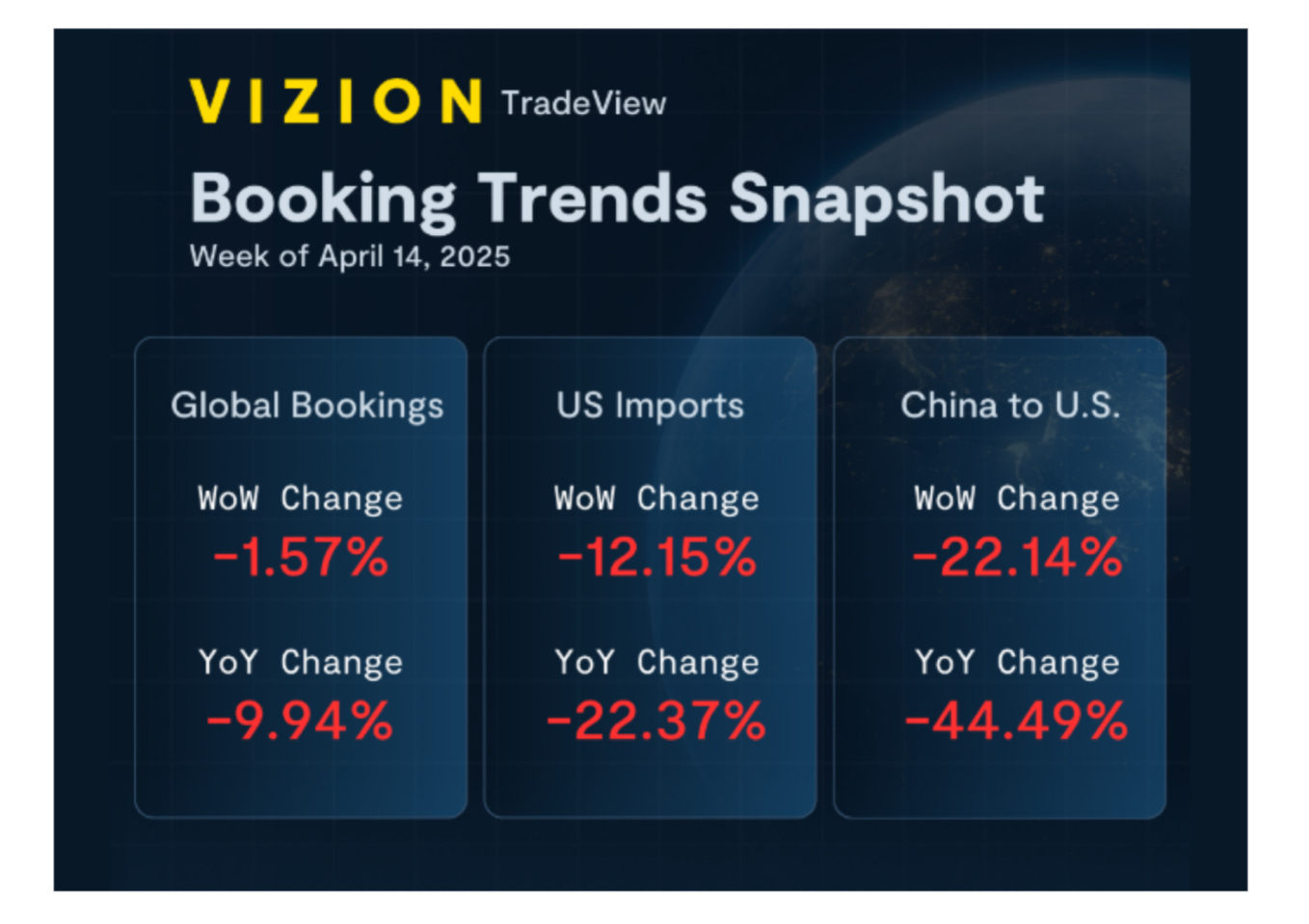
A year-over-year drop of 44.5 percent in ocean freight bookings from China, where we obtain most of our manufactured goods, is an eye popping number. It’s a self-induced, widespread blow to supply that we haven’t experienced since the pandemic.
And as they teach in Econ 101, less supply means higher prices.
La La Land
The Port of Los Angeles is our nation’s largest and normally busiest container port. Global freight arrives there from Asian manufacturing hubs such as China, Japan, South Korean and Vietnam then the goods are distributed across the West Coast and beyond.
That makes the LA port something of a canary in the tariff coal mine. Along with ports in Seattle and Long Beach, any blow from the trade war with China will be noticed and experienced first and hardest here.
So how bad do things look in Los Angeles? The UK’s Financial Times reports that the port there expects arrivals beginning May 4 to be a third lower than a year ago. In a more starkly ominous sign, many ships are even arriving empty. Los Angeles is expecting 20 blank sailings representing a quarter million containers in May. That’s up from just six such sailings in April.
The timing of all this is something else to keep in mind. I mentioned above that it takes time for a shockwave from a sudden tariff hike to hit our shores from across the Pacific. So how long are we talking?
Trump launched his all-out trade war against China on April 10. At that time, most importers simply gave up trying to bring things over. That’s because it takes around 30 days for container ships to travel from China to Los Angeles.
That means the first true effects from the trade war won’t begin to hit us until May 10, around 12 days from now. Now, major retailers have created some inventory cushions, as discussed above, so that may buy us a few more weeks. But these retailers also don’t want to overstock items and possibly be stuck with unsold goods. They’re doing their best to predict the unpredictable, to plan for the unplannable, but these are uncharted waters.
Along with Los Angeles, images from the usually bustling ports of Seattle and Long Beach instead now show empty docks.
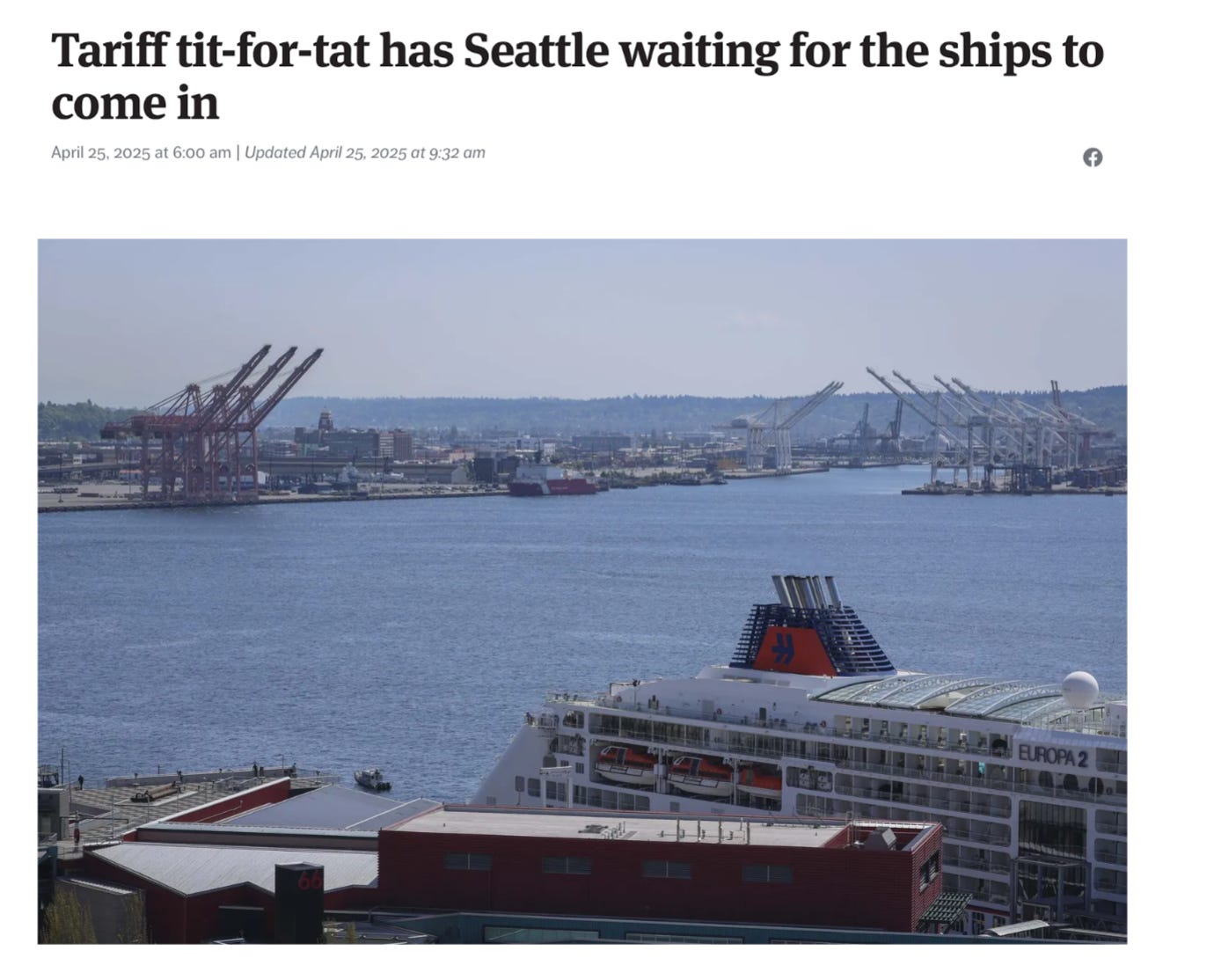
That means a big hit to warehouse jobs, trucking and delivery all along the West Coast. The Longshore Union, which had declined to endorse Kamala Harris and whose leader sought closer personal ties with Trump, issued a statement yesterday blasting Trump’s tariffs as “reckless” and “shortsighted” while warning of “massive job losses” and “higher prices.”
Once the goods stop arriving, the next part is predictable. Major retail CEOs, who held meetings with Trump urging him to back down, are now warning of empty store shelves. Shortages of goods could be exacerbated by customer hoarding as key items begin to run out.
The last time we saw this was during Covid, also under Trump.
Sticker shock
Social media is beginning to fill with posts and testimonials from small businesses, importers and customers who can barely believe what is happening.
Temu and Shein are companies that sell inexpensive Chinese-made products, and their customers are beginning to report on what these tariffs mean for their purchases.
Take a look at the “import charges” on this sample order from Temu, which the company has itemized so that customers understand why the final price tag is so high. After discounts, the import charges nearly double the price the customer will pay.
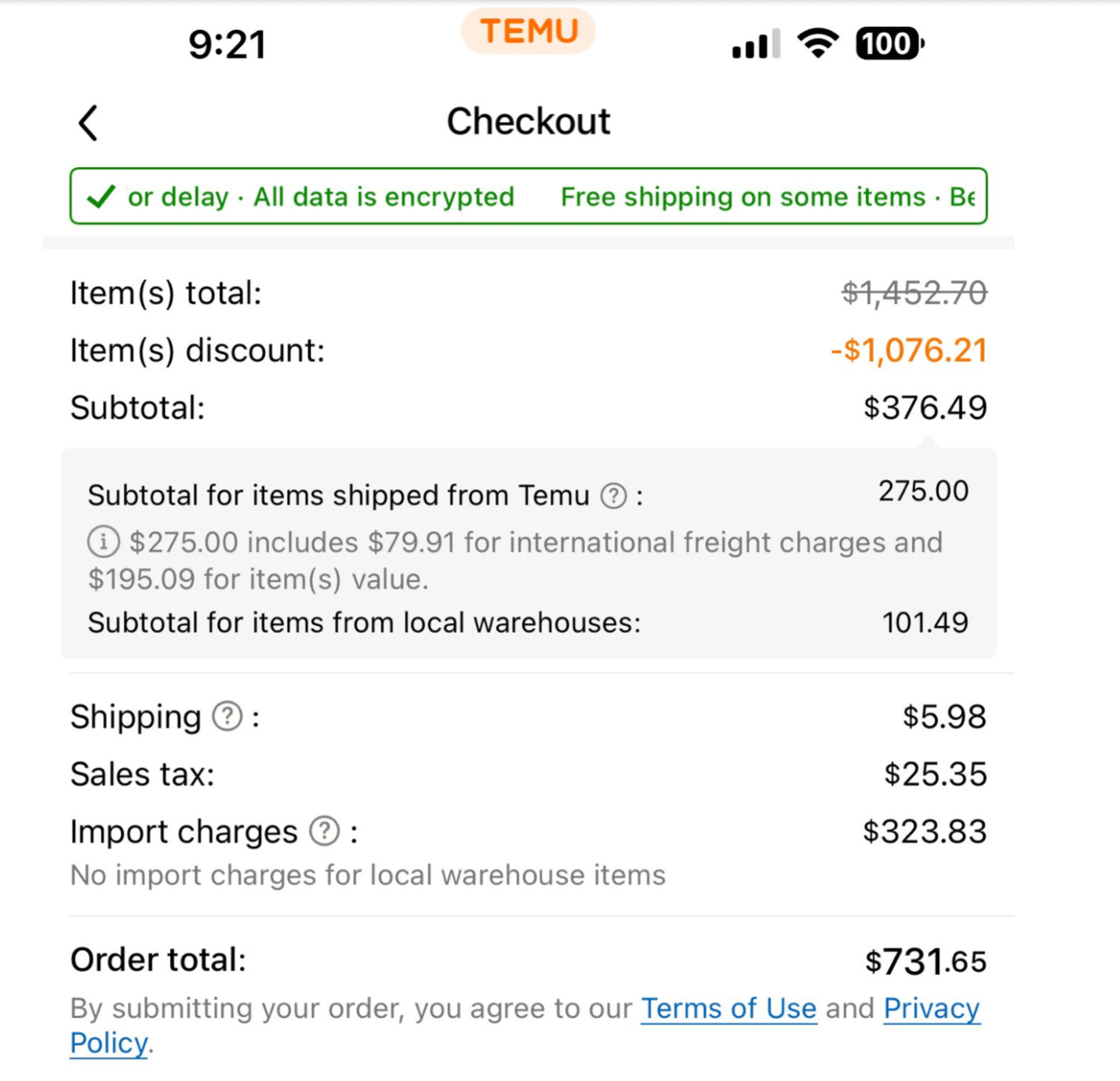
Trump’s own supporters may finally begin to understand that he has been lying, or at least badly mistaken, when he says that tariffs will be paid by foreign countries. It is becoming abundantly clear that U.S. consumers and importers will bear the brunt.
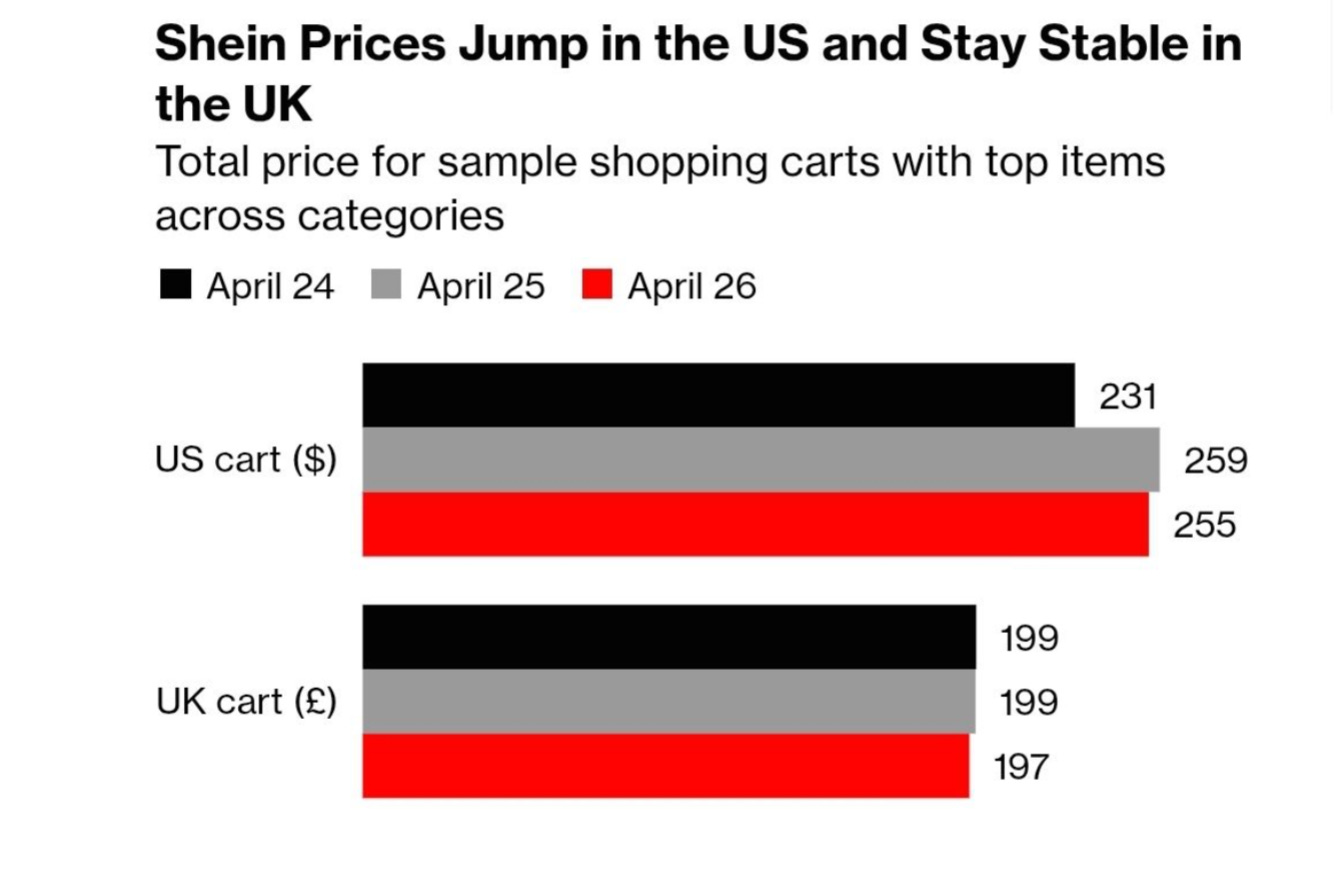
Another way to understand the effect on U.S. consumers is to compare a shopping cart of items purchased from Shein in the U.K. compared to one in the U.S. Here is the cart comparison Bloomberg recently ran, showing around a 25 percent difference in price by April 26.
Young U.S. customers in particular, who depend on such discount sites and low prices on manufactured goods, will likely feel the effects of the tariffs most immediately, along with parents with small children whose clothes, school supplies and toys will all see big hikes.
One more point. Trump’s approval numbers on the economy, particularly around inflation and tariffs, are already deeply underwater. But those numbers are largely anticipatory. They don’t yet reflect the Trump tariffs’ actual impact on prices that individuals and households will experience in the coming months.
It is also too late to reverse the effect of this first wave, which will hit in just over 10 days. Even if the trade war were to end tomorrow—and there is no sign the two sides are even talking to each other, despite Trump’s claims to the press—the shock to our system will reverberate for weeks if not months.
If the tariffs stay in place much longer, a recession, perhaps a very bad one, is almost inevitable.
And this time, Trump can’t blame a virus.
I can do without new clothes and shoes for a while, maybe even some foods, but medication is another thing altogether. Without certain (affordable) meds, I could end up in the hospital or worse, the undertaker's. I'm certain I'm not alone in this. The tariffs aren't just inconveniences, they're killers.
To me, it sounds like part of the comprehensive plan to destroy the country. Trump is the all too willing frontman, but those behind him are the enforcers.