
Next Stop: Havana
All the signals are blaring that Trump, at the urging of Marco Rubio, will attack Cuba next.

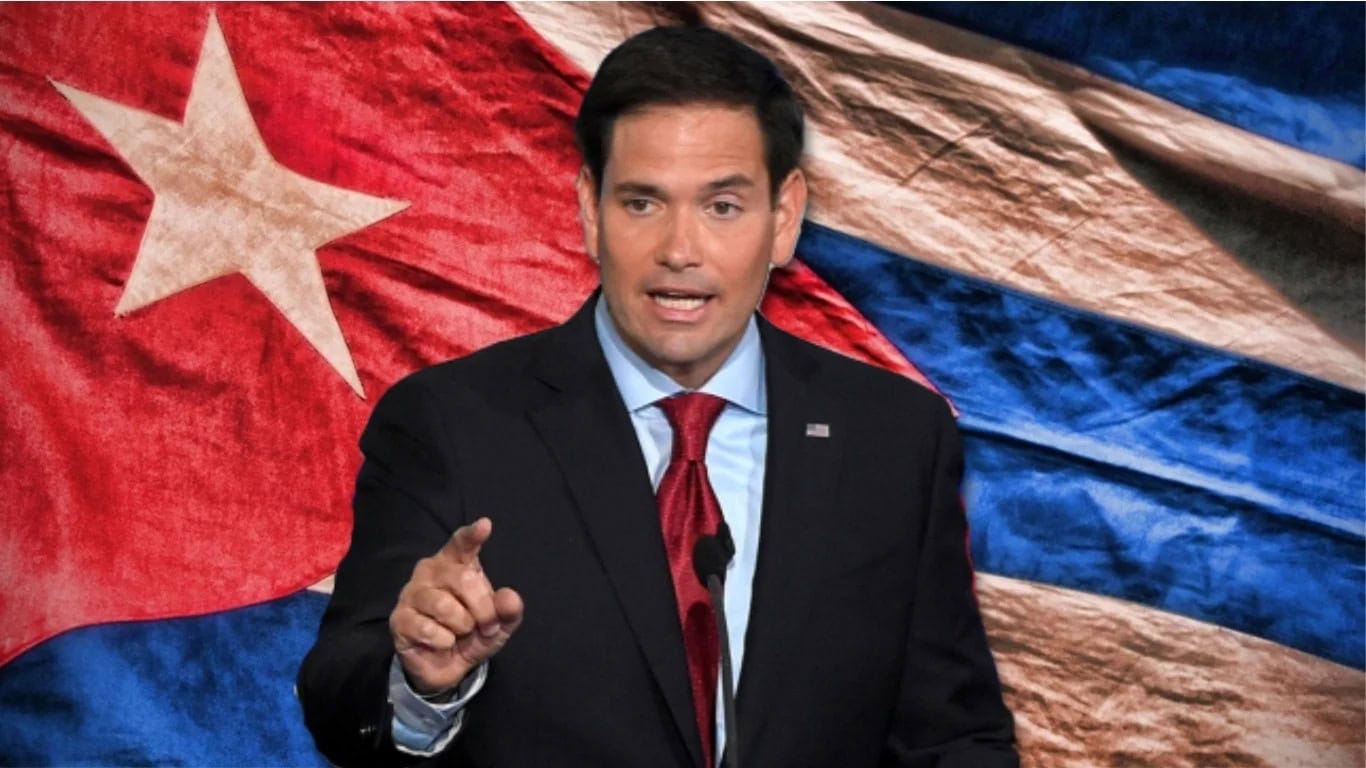
Today, the Trump regime indicted former Cuban President Raúl Castro for the 1996 downing of two planes operated by the Miami-based exile group Brothers to the Rescue. The charges, including conspiracy to kill U.S. nationals, four counts of murder and two counts of destroying aircraft, were announced by Acting Attorney General Todd Blanche at Miami’s Freedom Tower, on Cuban Independence Day.
At the announcement, Secretary of State Marco Rubio delivered a Spanish-language video address to the Cuban people urging them to side with Donald Trump against their own government.
None of this staging was accidental. We have now seen this pre-intervention playbook twice before, once with Venezuela and again with Iran. There is strong reason to believe a war with Cuba is already in the works, if not imminent.
The Maduro precedent
In January, Nicolás Maduro was seized and taken to the United States to stand trial after a prior indictment. Cuban officials had already made clear that they believed a Castro indictment would set the stage for a similar military action against Cuba as part of yet another leadership capture operation.
Cuban President Miguel Díaz-Canel called the charges against Castro “a political manoeuvre, devoid of any legal basis,” aimed solely at fabricating a justification for military action. William LeoGrande, a Latin American politics specialist at American University, concurred: “It appears that the Trump administration is trying to lay the political groundwork for military action against Cuba,” he said, adding that the indictment is likely the final nail in the coffin for any diplomatic off-ramp.
The liberation narrative
Alongside the indictment, Rubio delivered a video message in Spanish. It was the first time he had addressed the Cuban population directly as Secretary of State. His pitch: the United States would offer $100 million in aid and a “new relationship” between the two countries. The obstacle, Rubio claimed, is “those who control your country,” who have “plundered billions of dollars” while leaving Cubans without electricity, food, or fuel. “President Trump is offering a new path between the U.S. and a new Cuba,” he promised.
This is the same rhetorical architecture the regime deployed before attacking Venezuela: cast the regime as the people’s enemy, position the U.S. as liberator, and offer the population a deal their government cannot. Trump and Rubio want to be seen as rescuers, not invaders.
Indeed, Trump ran a similar script with Iran, though only after the bombing had started. As U.S. and Israeli strikes hit the country in late February, Trump advised the Iranian people to take cover and then rise up: “When we are finished, take over your government. It will be yours to take. This will probably be your only chance for generations.”
Rubio’s lifelong mission
To understand what’s driving the Cuba campaign, let’s start with Marco Rubio.
As he likes to tell the story, as a child, Rubio sat at his grandfather’s feet on the front porch, as he told tales of Cuba’s heroes and of life under the communist regime his family left behind. As he recalled boasting in his 2012 memoir, he would “someday lead an army of exiles to overthrow Fidel Castro and become president of a free Cuba.” His grandfather, who was his “mentor and closest boyhood friend,” detested President John F. Kennedy for the Bay of Pigs while revering President Ronald Reagan for his hardline anti-communism. That worldview passed directly to Rubio.
Rubio is the first Cuban American to serve as Secretary of State and the first Floridian secretary working for the first Floridian president. The Washington Monthly noted that prior Republican presidents from Nixon to Trump 1.0 won the anti-Castro votes of South Florida but had little real appetite for regime change. After all, no one wanted to relive the Bay of Pigs.
Rubio is different. For him, this is personal—a mission decades in the making. Cuba’s own former foreign affairs envoy has described Rubio’s fixation as an “obsession,” noting his career has been bankrolled by the most confrontational wing of Miami’s exile community, including those who have always sought the return of pre-1959 Cuba.
During Trump’s first term, as a U.S. senator, Rubio helped construct a sanctions regime built around starving GAESA—the military conglomerate controlling much of Cuba’s economy, including its hotel sector—of money. He also called for Castro’s indictment back then. Now, as Secretary of State, he believes he has the authority and power to finish what he started.
“Make no mistake,” declared Steve Bovo, the former mayor of Hialeah, Florida and a close friend of Rubio, “a free Caracas should lead to a free Havana.”
The strangulation campaign
Since January, the Trump administration has implemented over 240 sanctions against the Cuban regime. It has also intercepted at least seven oil tankers, reducing the island’s energy imports by 80 to 90 percent. In early May, Rubio sanctioned GAESA, prompting shipping giants Hapag-Lloyd and CMA CGM to halt cargo bookings to the island entirely.
The toll on ordinary Cubans has been severe. Electricity is available for only two hours a day in some parts of the country. Food is scarce. Díaz-Canel has claimed that more than 90,000 Cubans are awaiting surgical operations, including over 11,000 children, because the blockade has cut off the supplies needed to perform them. His frustration was pointed. “If we are so incapable, why don’t they allow us to fail on our own?”
The military signals
Beyond the economic pressure, there is an increasingly clear military picture. A CNN investigation using public aviation data found a significant and unprecedented surge in U.S. military intelligence flights off Cuba’s coast. The flights include P-8A Poseidon maritime patrol planes, RC-135V Rivet Joint signals intelligence aircraft, and MQ-4C Triton high-altitude drones flying within 40 miles of Cuba’s shoreline.
Analysts noted that both the Venezuela operation and the Iran strikes were preceded by exactly this kind of surveillance surge.
The signal from SOUTHCOM was equally blunt. Rubio was photographed in front of a map of Cuba at Southern Command headquarters in Doral, Florida, during the Chiefs of Mission Conference. Rubio noted, pointedly, that Cuba “is in Southern Command, it’s the closest to the U.S.” The State Department has since begun deploying personnel to SOUTHCOM in anticipation of potential hostilities.
Trump himself has been candid about his plans. He suggested that the aircraft carrier USS Abraham Lincoln could stop off the coast of Cuba on its way back from Iran. “Come in, stop about 100 yards offshore,” he said, “and they’ll say: ‘Thank you very much. We give up.’”
Díaz-Canel responded by invoking Cuba’s “War of All the People” doctrine and warning that a U.S. assault would cause “a bloodbath with incalculable consequences.”
The Iran variable
The main brake on any Cuba action appears to be the current war in Iran. The large-scale U.S. military presence that preceded both Venezuela and Iran, including carrier strike groups, amphibious forces and special operations deployments, has not yet materialized in the Caribbean at the scale a major Cuba operation would require. This is because the assets that would be needed are tied up in the Middle East.
Yet this is precisely the scenario Trump has been describing. When forces begin returning from Iran, they could stop off the coast of Cuba. If the Iran conflict ends with the U.S. backing away from its maximalist demands, it would mark a humiliation on the global stage for the U.S.
Trump, ever sensitive to such things, could reach for something decisive to shore up his foreign policy record, particularly before the midterms.
Cuba is 90 miles away. The indictment against Castro is now on the books. The sanctions are already squeezing the island nation hard. The surveillance is in place. And Rubio just spent Cuban Independence Day telling the Cuban people that their government is the principal obstacle between them and American aid.
Marco probably has already had Susie Wiles use her AI machine to locate parcels of land to claim. If he doesn't end up with beachfront property to develop by the time this is all over, I'll do a Substack video wearing a red MAGA cap.
This nation is governed by a big fat crime syndicate. We're about to find out definitively what attracted Rubio to this clown show in the first place.
Trump wants to turn Cuba into a trump resort.